Water Heater Leak Cleanup in Pahrump, NV
Hard groundwater builds scale inside a tank until it rusts through or a valve fails. The water heater crew extracts the spill, opens wet wall bottoms and dries the garage, closet or hallway around it.
(888) 996-7702Clean up the water heater spill- Tank spill extraction
- Wall-bottom drying
- Moisture readings
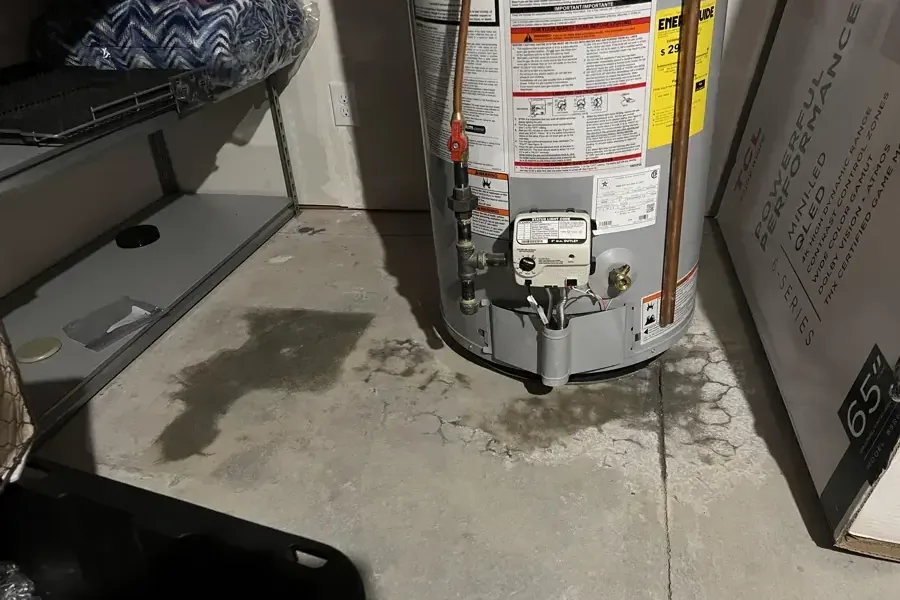
First steps for water heater leak cleanup
- 1
Shut off the cold supply
The valve on top of the tank.
- 2
Cut power or gas
At the breaker or the gas valve on the tank.
- 3
Open a hot tap
It relieves pressure in the system.
- 4
Call a drying crew
Water spreads under walls and flooring.
How the crew handles water heater leak cleanup
A typical tank holds 40 to 50 gallons, and a failed tank keeps refilling from the supply until the valve is shut. A slow drip from a relief valve can also soak a closet for weeks before it is noticed.
Still seeing water spread?
(888) 996-7702Get the tank spill driedWhat does water heater leak cleanup cost in Pahrump, NV?
Water heater leak cleanup typically runs $900 to $7,500, depending on where the tank sits, how long it leaked and how much drywall, flooring and cabinetry the water reached.
These are typical figures, not a quote. Water category, wet square footage, material class and how soon drying began move the total most. The water damage cost calculator narrows it for your home.
Garage spill, caught early
$900 to $2,500
- Extraction
- Slab drying
- Baseboard check
Closet and nearby rooms
$2,500 to $5,000
- Wall-bottom cuts
- Flooring removal
- Daily readings
Long leak or belly
$5,000 to $7,500
- Subfloor drying
- Insulation removal
- Extended equipment
How water heater leak cleanup is handled, step by step
Shut down
Water, power or gas to the tank off.
Extract
Standing water removed from floors.
Open
Wet wall bottoms and baseboards removed.
Dry
Slab, subfloor and walls dried to a reading.
Why tanks fail early here
Mineral-heavy water leaves sediment at the bottom of the tank, which makes the tank work harder and speeds up corrosion. Valves crust over, and the anode rod that protects the tank wears out sooner. Flushing the tank and checking the anode rod help tanks last.
- Rusty water or rumbling from the tank
- Water around the base of the tank
- A dripping temperature and pressure relief valve
- Corroded fittings on top of the tank
Garage, closet or attic
In a garage the water often runs across the slab and under the wall into the next room. In an interior closet it soaks the wall bottoms, baseboards and nearby flooring. In a manufactured home the closet sits over the belly, so water drops under the floor. The crew checks every side with meters, and the EPA WaterSense program covers fixing household leaks.
Drying around the tank
Wet drywall at the base is cut where readings say, baseboards come off and the slab or subfloor gets air movers and a dehumidifier. Drying fast matters, since the EPA notes mold can start on damp materials within 24 to 48 hours.
Trade fact: A plumber replaces the tank. The restoration crew removes the water and dries the rooms and materials it reached.
Water heater leak cleanup across Pahrump and the valley
The restoration crew covers ZIP 89041, 89048, 89060 and 89061, from the Calvada Valley and Calvada Meadows grid through Hafen Ranch and the homes along Homestead Road and Basin Avenue to Mountain Falls and Artesia on the south side.
Outlying valley calls reach Sandy Valley and Amargosa Valley as well.
Other water problems the crew handles
How much water can a water heater release?
The tank volume plus whatever the supply keeps feeding it until the valve is closed, which can be far more than the tank holds.
Why do water heaters fail sooner on hard water?
Sediment and scale build up inside, make the tank run hotter at the bottom and speed up corrosion. Regular flushing helps.
Is a dripping relief valve an emergency?
It means pressure or temperature is too high or the valve is failing. Have a plumber look at it soon, and keep the area dry.
Does the drywall have to come out?
Only where meters show water. A strip near the floor is often enough when drying starts quickly.
How long does drying take?
Usually two to five days for a garage or closet leak. A long leak or water under a manufactured home floor takes longer.
Will insurance cover the damage?
Water damage from a sudden tank failure is often covered, while the tank itself usually is not. Coverage depends on your policy, so check with your own insurer.
Water heater burst? Get the water up now.
A failed tank keeps feeding water into walls and flooring until the supply is shut. The crew extracts and dries to a reading.
Nye County, Nevada · every hour, every day