Slab Leak Water Damage in Pahrump, NV
A pipe leaking under the slab soaks the concrete, the flooring and the bottom of the walls long before a puddle appears. The slab leak crew maps how far the water spread and dries it to a reading.
(888) 996-7702Start slab leak drying- Thermal imaging
- Flooring lifted only where wet
- Slab moisture readings
First steps for slab leak water damage
- 1
Shut off the water
Close the main or switch off the well pump.
- 2
Note the warm spots
Mark where the floor feels warm or wet.
- 3
Call a leak detection plumber
The pipe has to be found and fixed.
- 4
Call a drying crew
Water under flooring will not dry on its own.
How the crew handles slab leak water damage
A slab leak is a supply pipe leaking under or inside the concrete floor. The water has nowhere to go but sideways and up, so it spreads under tile and carpet and wicks into the drywall before anyone sees it.
Still seeing water spread?
(888) 996-7702Get slab leak drying startedWhat does slab leak water damage cost in Pahrump, NV?
Slab leak water damage typically runs $1,800 to $20,000 for the extraction, removal and drying, separate from the plumbing repair. The total depends on how long the leak ran, how many rooms it reached and what flooring sits on the slab.
These are typical figures, not a quote. Water category, wet square footage, material class and how soon drying began move the total most. The water damage cost calculator narrows it for your home.
Caught early, one room
$1,800 to $5,000
- Thermal mapping
- Wall-bottom cuts
- Slab drying
Several rooms
$5,000 to $11,000
- Flooring removal
- Drying mats
- Daily readings
Long-running leak
$11,000 to $20,000
- Large removal
- Extended drying
- Cabinet and trim removal
How slab leak water damage is handled, step by step
Map
Thermal imaging and meters trace the wet area.
Open
Flooring and wall bottoms opened where readings show water.
Dry
Dehumidifiers, air movers and mats on the slab.
Verify
Slab and walls read dry against a reference.
Why slabs leak in valley homes
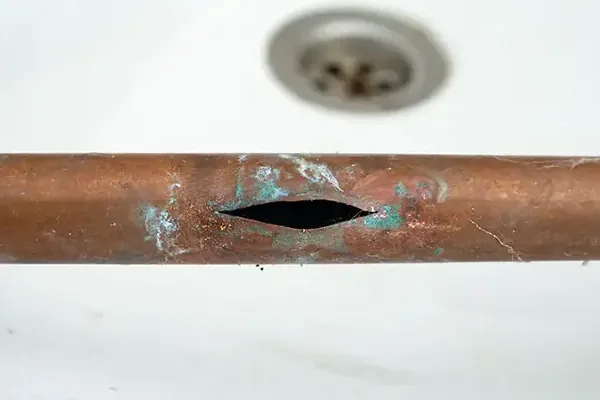
Many site-built homes in town sit on a concrete slab with copper supply pipe buried underneath. Hard, mineral-heavy groundwater and years of pressure wear on that pipe, and pinhole leaks are common on hot water runs. The USGS explains what makes water hard.
- Warm or hot spots on tile or carpet
- The sound of running water with every tap off
- A well pump or meter that runs when nothing is on
- Damp baseboards or swollen wall bottoms
Plumber first, then drying
A leak detection plumber pinpoints the leak and repairs or reroutes the pipe. The slab leak crew then maps how far the water traveled with thermal imaging and meters, lifts flooring only where readings show water and opens the bottom of the drywall where it wicked up.
Drying the concrete
Concrete holds water and gives it up slowly. The drying team uses dehumidifiers, air movers and sometimes drying mats on the slab, and takes readings every day until the slab and walls match a dry reference. The EPA WaterSense program has tips for checking a home for hidden leaks.
Trade fact: Tile laid over a wet slab can often stay, while carpet pad, laminate and floating floors over the leak usually come out so the concrete can dry.
Slab leak water damage across Pahrump and the valley
The restoration crew covers ZIP 89041, 89048, 89060 and 89061, from the Calvada Valley and Calvada Meadows grid through Hafen Ranch and the homes along Homestead Road and Basin Avenue to Mountain Falls and Artesia on the south side.
Outlying valley calls reach Sandy Valley and Amargosa Valley as well.
Other water problems the crew handles
How do I know a slab leak caused the damage?
Warm floor spots, running-water sounds, damp baseboards and a pump or meter that runs with everything off are the usual signs. A leak detection plumber confirms it.
Does the whole floor have to come up?
No. Readings decide. Flooring is lifted only where the slab under it reads wet, and tile often stays.
How long does a slab take to dry?
Usually four to ten days once the pipe is fixed. A long-running leak or a large wet area takes longer, and readings decide when equipment comes out.
Who repairs the pipe?
A plumber repairs it or reroutes it through the walls or attic. The restoration crew handles the water damage: extraction, removal and drying.
Is slab leak damage covered by insurance?
Many policies cover sudden water damage but not the pipe, and some cap the cost of breaking into the slab. Coverage depends on your policy, so check with your own insurer.
Can a slab leak happen again?
Yes. Old copper under the slab can leak at a new spot, which is why many owners choose a reroute instead of a spot repair.
Leak under the floor? Get it dried before it spreads.
A slab leak keeps soaking flooring and wall bottoms until the pipe is fixed and the concrete is dried to a reading.
Nye County, Nevada · every hour, every day