Manufactured Home Water Damage in Pahrump, NV
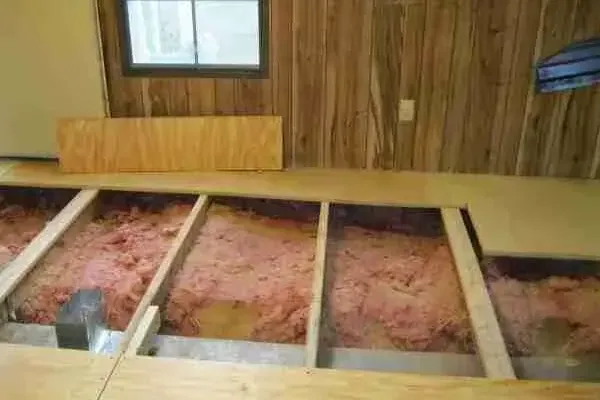
A leak in a manufactured home often runs into the belly under the floor, where it soaks the insulation and decking for weeks. The crew opens the belly, removes what is soaked and dries the floor system to a reading.
(888) 996-7702Get the floor system dried- Belly wrap opened and resealed
- Wet insulation removed
- Floor decking readings
First steps for manufactured home water damage
- 1
Shut off the water
Close the main or switch off the well pump.
- 2
Check under the skirting
Look for drips and a sagging belly.
- 3
Stay off soft floors
Swollen decking can give way.
- 4
Call a drying crew
Water in the belly will not dry on its own.
How the crew handles manufactured home water damage
A manufactured home carries its pipes and ducts in the floor system, wrapped underneath by a fabric or plastic belly. When a pipe or drain leaks there, the belly holds the water like a sling, and the insulation stays soaked against the floor decking.
Still seeing water spread?
(888) 996-7702Get under-floor drying startedWhat does manufactured home water damage cost in Pahrump, NV?
Manufactured home water damage typically runs $1,500 to $15,000, depending on how much of the belly holds water, how much insulation is soaked and whether floor decking has to be replaced.
These are typical figures, not a quote. Water category, wet square footage, material class and how soon drying began move the total most. The water damage cost calculator narrows it for your home.
Caught early, one area
$1,500 to $4,000
- Belly opened
- Insulation removal
- Belly patched
Several rooms
$4,000 to $9,000
- Decking sections replaced
- Floor system drying
- Daily readings
Long-running leak
$9,000 to $15,000
- Large decking removal
- Joist drying
- Extended equipment
How manufactured home water damage is handled, step by step
Find
Meters and a look under the skirting locate the leak.
Open and drain
The belly is cut, drained and the wet insulation pulled.
Dry
Air into the belly cavity, dehumidifiers inside.
Close up
The belly is patched once readings say dry.
Why manufactured homes take water differently
Many homes in the valley are manufactured, and their plumbing runs under the floor instead of in a slab. Supply pipes, drain connections, the water heater closet and the washer box can all leak into the belly. Those pipes also sit close to cold air on freezing desert nights, which is why skirting and heat tape matter.
- A bulging or sagging belly wrap
- Soft spots or swelling in the floor
- Musty smells near bathrooms or the laundry
- Water dripping from under the skirting
Opening the belly
The crew cuts the belly wrap where readings show water, drains it and pulls out the wet insulation. Floor decking, often particleboard or OSB, is checked with meters. Swollen decking usually has to be replaced, while joists are dried. The belly is patched and taped once the floor system reads dry.
Drying a floor system
Air movers push dry air into the belly cavity while dehumidifiers run inside the home, and readings are taken from above and below every day. Ready.gov covers protecting pipes in cold weather, and the EPA notes mold can start on damp materials within 24 to 48 hours.
Trade fact: Particleboard decking loses strength once it swells. A meter reading and a check for soft spots decide whether it stays or is cut out.
Manufactured home water damage across Pahrump and the valley
The restoration crew covers ZIP 89041, 89048, 89060 and 89061, from the Calvada Valley and Calvada Meadows grid through Hafen Ranch and the homes along Homestead Road and Basin Avenue to Mountain Falls and Artesia on the south side.
Outlying valley calls reach Sandy Valley and Amargosa Valley as well.
Other water problems the crew handles
How do I know water is in the belly?
A sagging or bulging belly wrap, soft floor spots, musty smells or drips from under the skirting are the usual signs.
Can wet belly insulation be dried?
Rarely. Fiberglass in the belly stays soaked and heavy, so it is removed and replaced once the floor system is dry.
Does the floor have to be replaced?
Only where the decking swelled or went soft. Meters and a walk across the floor show which sections stay.
Why do pipes freeze in manufactured homes?
Supply pipes in the belly sit close to the cold air under the home. Damaged skirting, a torn belly or failed heat tape lets them freeze on a hard night.
How long does drying take?
Usually four to eight days once the belly is open and drained. Readings from above and below decide when equipment comes out.
Is it covered by insurance?
A sudden leak is often covered, while wear and long-term leaks may not be. Coverage depends on your policy, so check with your own insurer.
Water under a manufactured home? Get it out before the floor goes soft.
Water held in the belly keeps soaking insulation and decking. The crew opens it, removes what is soaked and dries to a reading.
Nye County, Nevada · every hour, every day