Structural Drying and Dehumidification in Pahrump, NV
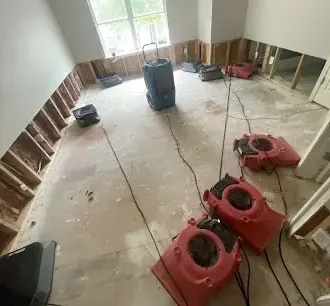
Desert air dries surfaces, not the inside of a wall or the concrete under the floor. The drying team sizes air movers and dehumidifiers to each room and keeps them running until readings match a dry reference.
(888) 996-7702Get structural drying set up- LGR dehumidifiers
- Psychrometric logs
- Dry reference readings
First steps for structural drying and dehumidification
- 1
Stop the source
No drying works while water still runs.
- 2
Extract first
Standing water has to come out.
- 3
Keep the house closed
Let the dehumidifiers work.
- 4
Leave equipment running
Turning it off resets the clock.
How the crew handles structural drying and dehumidification
Structural drying removes the water that soaked into the building itself: studs, plates, drywall, subfloor and concrete. It starts once extraction is done and ends when the readings, not the calendar, say the materials are dry.
Still seeing water spread?
(888) 996-7702Set up the drying equipmentWhat does structural drying and dehumidification cost in Pahrump, NV?
Structural drying typically runs $1,000 to $10,000, depending on how many rooms need equipment, the class of loss and how many days the materials take to reach a dry reading.
These are typical figures, not a quote. Water category, wet square footage, material class and how soon drying began move the total most. The water damage cost calculator narrows it for your home.
One room
$1,000 to $2,800
- Air movers
- LGR dehumidifier
- Daily readings
Several rooms
$2,800 to $6,000
- Multiple dehumidifiers
- Wall cavity drying
- Psychrometric logs
Whole home or Class 4
$6,000 to $10,000
- Desiccant drying
- Drying mats
- Extended equipment
How structural drying and dehumidification is handled, step by step
Map
Wet materials and a dry reference measured.
Set up
Air movers and dehumidifiers placed to the load.
Monitor
Readings and humidity logged daily.
Verify
Equipment out when readings match.
Why dry air is not enough
Low outdoor humidity helps, but it does not reach inside a wall cavity or under tile. Inside a closed-up house, wet materials push humidity up fast, so the drying team runs dehumidifiers to pull that moisture out and air movers to keep it coming off the surfaces.
- Air movers set to each room's evaporation load
- LGR dehumidifiers for most losses
- Desiccant dehumidifiers for dense Class 4 materials
- Drying mats for hardwood and concrete
The readings
The tech who does the walkthrough takes a dry reference reading from an unaffected material in the same house. Every day, wet materials are measured against it, and temperature and humidity are logged. Equipment comes out when materials read within 2 to 4 points of the reference. The EPA indoor air quality pages explain why indoor moisture matters.
Slabs and manufactured floors
Concrete gives up water slowly, so slab edges and wall bottoms over a wet slab often set the pace. In a manufactured home, the floor system is dried from below through the belly as well as from inside. Drying fast matters, since the EPA notes mold can start within 24 to 48 hours on damp materials.
Trade fact: Class 1 to 4 describes how much water the materials absorbed. It decides how many air movers and dehumidifiers a room needs.
Structural drying and dehumidification across Pahrump and the valley
The restoration crew covers ZIP 89041, 89048, 89060 and 89061, from the Calvada Valley and Calvada Meadows grid through Hafen Ranch and the homes along Homestead Road and Basin Avenue to Mountain Falls and Artesia on the south side.
Outlying valley calls reach Sandy Valley and Amargosa Valley as well.
Other water problems the crew handles
Why does the equipment stay so long?
Materials keep releasing water after the surface feels dry. Readings decide, and pulling equipment early can leave wet framing behind.
Can I turn the equipment off at night?
Please do not. Drying runs around the clock, and stopping it lets humidity build back up.
Why is it so loud and warm?
Air movers move a lot of air, and dehumidifiers give off heat as they pull water out. Both help the drying.
What is a dry reference?
A reading from the same kind of material in an unaffected part of the house. Wet materials are dried until they match it within 2 to 4 points.
What is an LGR dehumidifier?
A low grain refrigerant dehumidifier that keeps pulling water from the air even when the air is already fairly dry, which suits most water losses.
Does insurance cover drying?
Drying after a covered sudden loss is usually part of the claim. Coverage depends on your policy, so check with your own insurer.
Still damp days later? Have the drying set up today.
Damp framing and concrete stay wet until the right equipment runs to a reading. The drying team sets up and logs every day.
Nye County, Nevada · every hour, every day