Burst Pipe Water Damage in Pahrump, NV
Pipes under pressure fail fast: a cracked fitting or a split supply hose can flood several rooms before anyone reaches the valve. The burst pipe crew pulls the water up, opens only the wall sections meters flag and dries the framing.
(888) 996-7702Stop the burst pipe spread- Thermal imaging
- Targeted wall openings
- Daily drying logs
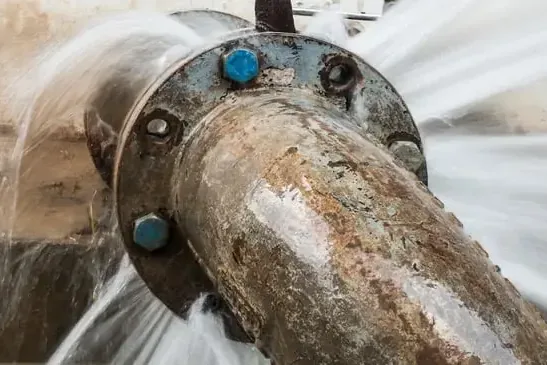
First steps for burst pipe water damage
- 1
Close the main
Or switch off the well pump and close the tank valve.
- 2
Drain the pressure
Open a low faucet once the valve is closed.
- 3
Call a plumber
The pipe needs repair before the house can dry.
- 4
Call a drying crew
Water inside walls will not dry on its own.
How the crew handles burst pipe water damage
Supply pipes hold constant pressure, and in a well home that pressure comes from the pump and pressure tank. When a fitting lets go, water sprays until someone shuts it off, so speed decides how much of the house stays dryable.
Still seeing water spread?
(888) 996-7702Get burst pipe drying underwayWhat does burst pipe water damage cost in Pahrump, NV?
Burst pipe water damage typically runs $1,400 to $25,000, depending on how long the pipe ran, how many rooms got wet and how much drywall, ceiling and flooring has to come out.
These are typical figures, not a quote. Water category, wet square footage, material class and how soon drying began move the total most. The water damage cost calculator narrows it for your home.
Caught fast, one area
$1,400 to $4,800
- Extraction
- Drying in place
- Daily readings
Several rooms or a ceiling
$4,800 to $11,000
- Flood cuts
- Ceiling removal
- Pad removal
Long-running break
$11,000 to $25,000
- Large removal
- Subfloor drying
- Extended equipment
How burst pipe water damage is handled, step by step
Extract
Standing water out of carpet, pad and tile.
Trace
Meters follow the water into walls and ceilings.
Open
Targeted drywall cuts and insulation removal.
Dry
Framing and floors dried to a dry reference.
Where pipes fail in valley homes
Failures cluster at fittings, at braided supply hoses under sinks and toilets, and at pipe exposed to heat or cold in attics, garages and exterior walls. Hard water leaves scale that stiffens valves and wears fittings over time.
- Fittings and joints that crack or pull apart
- Braided supply hoses to sinks, toilets and washers
- Pipe in the attic, the garage or an exterior wall
- Pressure tank and well pump connections
Opening only what is wet
Thermal imaging and pinless meters show how far water traveled inside a wall. The crew cuts drywall only where readings say, usually a strip near the floor, and pulls soaked insulation. Studs and plates stay and are dried. The EPA WaterSense program explains how to find and fix household leaks.
Ceilings and attics
A pipe that bursts in the attic sends water through the insulation and into the ceiling drywall below. Wet attic insulation comes out, and sagging ceiling drywall is taken down before it falls. Drying quickly matters because the EPA notes mold can grow on damp materials within 24 to 48 hours.
Trade fact: A plumber repairs the pipe. The restoration crew finds where the water went and dries it, including inside walls and above the ceiling.
Burst pipe water damage across Pahrump and the valley
The restoration crew covers ZIP 89041, 89048, 89060 and 89061, from the Calvada Valley and Calvada Meadows grid through Hafen Ranch and the homes along Homestead Road and Basin Avenue to Mountain Falls and Artesia on the south side.
Outlying valley calls reach Sandy Valley and Amargosa Valley as well.
Other water problems the crew handles
Do the walls have to be torn out?
Not always. Clean water caught early can often be dried through small openings, while soaked insulation and swollen drywall are removed.
Why does a well home lose so much water from a burst?
The pump keeps refilling the pressure tank as long as it has power, so water keeps flowing until the pump breaker is off.
How long does burst pipe drying take?
Usually three to seven days for a contained loss. A ceiling, hardwood or a long-running break takes longer.
Should I take down a sagging ceiling myself?
No. Keep clear of it. A wet ceiling can hold a lot of water, and the crew drains and removes it safely.
Who repairs the pipe?
A plumber. The restoration crew handles extraction, removal of ruined materials and drying.
Is a burst pipe covered by insurance?
A sudden pipe break is often covered, while slow leaks and wear are treated differently. Coverage depends on your policy, so check with your own insurer.
Pipe burst at home? Get emergency water removal moving.
Pressurized water reaches wall cavities and ceilings quickly. Extraction comes first, then drying until the meters agree.
Nye County, Nevada · every hour, every day