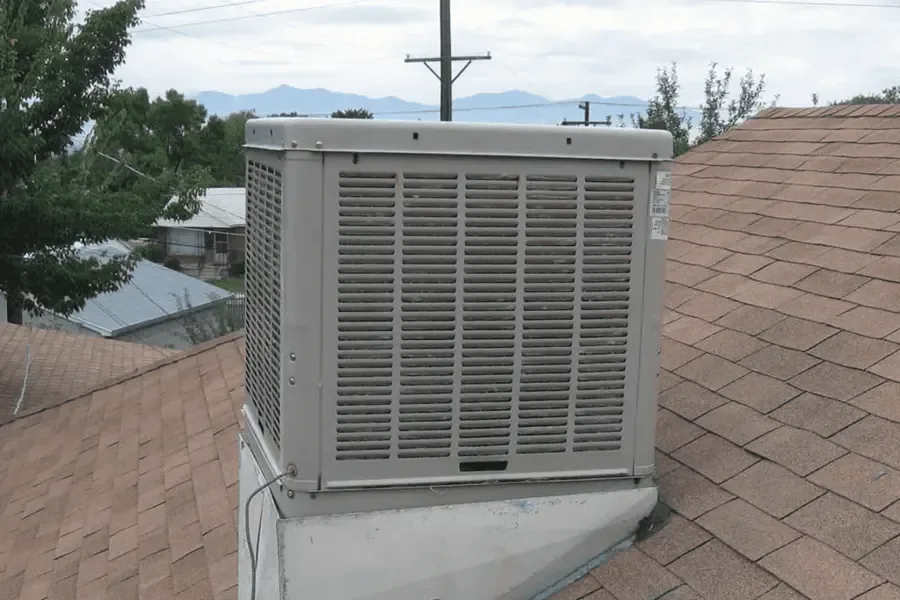
Swamp coolers are a common way to cool a desert home, and when the season ends the unit sits through winter with water still in the pan and the supply pipe. Clear nights below freezing can split a forgotten fitting and send water into the ceiling below.
Key takeaways
- Shut off the cooler's water supply and drain the pan and supply pipe before the first hard freeze.
- Water left in a supply pipe, float valve or pan can freeze and split on clear winter nights.
- A leak at a roof mount or ceiling duct often appears as a stain on the ceiling or wall below.
- Cover the unit and close the duct opening to keep cold air and rain out of the house.
- If a stain appears anyway, shut off the supply and call for drying before the drywall sags.
How a swamp cooler holds water, and why that matters in winter
An evaporative cooler pulls air through wet pads. A pump lifts water from a pan to the pads, a float valve refills the pan, and a supply pipe feeds the valve.
That is a lot of water in a small unit. When cooling season ends, every part of it can hold water into winter.
Unlike a refrigerated system, an evaporative cooler adds water to the air as it works. That is why a leak is built into the design if any seal or fitting gives out.
A unit that is shut down early in the fall has the best chance of being dry, clean and ready when spring comes.
- The pan holds standing water.
- The float valve and supply pipe hold pressurized water.
- The pump and its hose hold a little more.
- The pads stay damp until they dry out.
A shutdown routine, step by step
The water side
Water is the part that freezes and splits, so it comes first.
A pan that is drained but still holds a small puddle can freeze and crack at the seam, so it is worth drying the pan out with a towel.
- Close the supply valve to the cooler.
- Drain the pan completely, including the drain fitting.
- Disconnect and drain the supply pipe and the pump hose where they can be reached.
- Leave the float valve and the drain open so nothing holds water.
The air side
Once the water is out, the unit is closed up so cold air and rain stay out.
- Remove or clean the pads and let them dry.
- Close and seal the duct opening at the ceiling grille.
- Cover the unit with a fitted cover or a sealed wrap.
- Mark the supply valve so it is opened first next spring.
The roof and ceiling side
A quick look at the places where water would enter the house costs little in the fall.
- Check the flashing and the seal where the unit meets the roof.
- Look at the ceiling around the grille for old stains or a soft spot.
- Replace a worn gasket or seal before the first winter storm.
Where winter leaks start
A cooler that was drained badly usually fails in one of a few places.
Mineral-heavy water adds to the problem. Scale crusts the float valve and the pan, which can jam the valve open or crack a seam when water freezes against it.
- A split supply fitting or pipe.
- A cracked float valve.
- A frozen drain fitting at the pan.
- A cracked pan seam.
- A failed seal where the unit meets the roof or wall.
How a cooler leak appears inside the house
Water from a roof mounted cooler follows the duct down. It shows as a stain around the ceiling grille, a bubble in the paint or damp insulation above the drywall.
A wall or window unit sends water down the wall cavity instead.
A split that happens on a freezing night often leaks only at the thaw, so a dry morning proves little. The swamp cooler leak water damage page shows how these losses are dried.
The same fitting problem on a house supply pipe is covered under frozen pipe water damage.
- A stain or ring around the ceiling grille.
- A bubble or blister in the ceiling paint.
- Damp or sagging insulation above the drywall.
- A drip at the grille when the unit is off.
- A musty smell in the room under the unit.
Roof mounts and the roof connection
A roof mounted unit passes through the roof, and the flashing and seal there can fail. Rain is rare in a normal year, so a failed seal can go unnoticed until the first storm.
A wet ceiling after rain may come from the roof, the cooler or both. The roof leak water damage page covers the roof side.
- A stain on the ceiling directly under the unit after rain.
- Rust streaks or lifted sealant at the base of the unit.
- Damp insulation around the duct opening.
- A drip at the grille that follows the weather instead of the unit.
What drying a cooler leak looks like
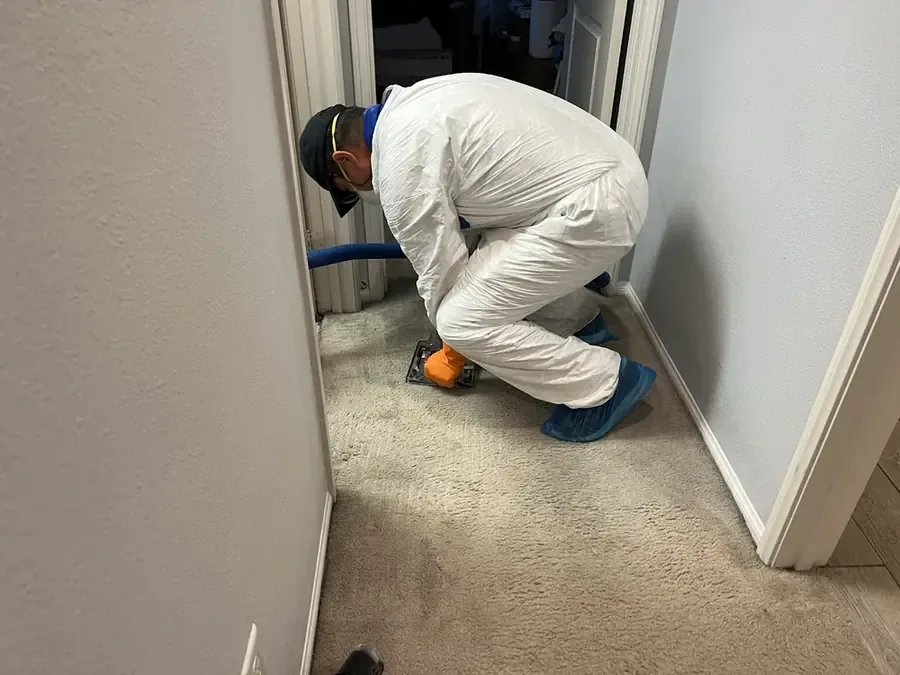
Ceiling drywall and the insulation above it hold water long after the leak stops. Drying follows the water up and down the duct.
- Standing water is removed and wet insulation is pulled out of the ceiling cavity.
- The ceiling is opened where readings stay high.
- Air movers and dehumidifiers dry the cavity, the duct opening and the wall below.
- Daily readings are logged until the materials match a dry reference.
If the ceiling is already wet
Shutting off the supply stops the leak, but the ceiling and insulation can hold a lot of water.
- Close the cooler's supply valve and any valve that feeds the roof.
- Place a bucket under a drip and keep clear of a bulging ceiling.
- Photograph the stain, the duct opening and the floor below.
- Call for drying before the drywall sags or the insulation soaks through.
- Let the restoration team release trapped water in a controlled way.
Questions
When should a swamp cooler be shut down for winter?
Before the first hard freeze. Clear nights in the valley can fall below freezing, so the shutdown belongs in the fall and not after the first cold snap. If the first freeze has already come and the cooler was never drained, shut off the supply and drain it as soon as it is safe.
Can a cooler with water in the pan freeze and leak?
Yes. Water left in the pan, float valve or supply pipe can freeze, and a split fitting leaks when it thaws.
Does a cover alone protect the cooler?
No. A cover keeps rain and cold air out, but it does not drain the water. Draining the pan and shutting off the supply come first. A cover also should not trap water, so the unit is drained and dry before it is wrapped.
How is a leaking cooler told apart from a roof leak?
Timing helps. A cooler leak shows around the duct and follows the unit running or a pipe thawing, while a roof leak follows rain.
What should happen to a bulging ceiling?
Keep clear of it and let the restoration team release the water in a controlled way. A bulging ceiling can hold far more water than it looks like.
What happens to a ceiling after a cooler leak?
Wet drywall that has softened or stained through usually comes down, and wet insulation above it is removed. Firm drywall with a stain can often be dried in place, and readings show which case applies. The work is covered under structural drying.