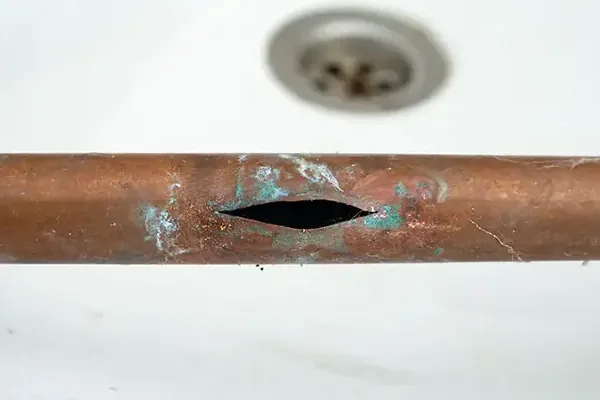
Most homes in the valley sit on a concrete slab, so a leaking supply pipe can run for weeks under the floor before a stain appears. The first signs are small, and by then the water has usually spread sideways under the flooring.
Key takeaways
- A warm spot on a tile floor, running water heard with every tap off, or a well pump that cycles with nothing on can all point to a leak under the slab.
- Close the main valve, or the valve past the pressure tank on a private well, and listen again to see whether the sound stops.
- A leak detection plumber finds and fixes the pipe, and the restoration team dries what the water soaked.
- Water travels sideways under flooring and wicks up the bottom of the drywall, so the wet area is larger than the visible stain.
- Drying reaches the slab edge, wall bottoms and flooring, and it ends only when readings match a dry reference.
Why slab leaks stay hidden in valley homes
Slab-on-grade construction puts supply pipe in or under the concrete, with no crawl space or basement to look into. Copper pipe under a slab can wear through at a pinhole, and the water has nowhere to go but sideways.
That is why the first sign is rarely a puddle. It is usually a change in how the house feels, sounds or smells.
Homes in older tracts such as Calvada Valley and Calvada Meadows, platted in the 1960s and 1970s, may still have original pipe under the floor.
Mineral-heavy groundwater can add to that wear over the years, which is one more reason a pinhole can open without any outside sign.
Warning signs inside the house
A slab leak rarely announces itself with a visible drip. Two or more of these signs together deserve a closer look.
- A warm or hot spot on a tile or concrete floor, often along the path of a hot water pipe.
- The sound of running or hissing water when every tap and appliance is off.
- A well pump that starts and stops with nothing running.
- Baseboards that are stained, swollen or damp, or drywall that feels cool and soft at the bottom.
- Flooring that lifts, cups or shows a dark patch with no obvious source.
- A musty smell in a closed room that has no other explanation.
- Unusually damp soil or a patch of greener growth along the foundation outside.
What to do first
Test which side of the valve the leak is on
Close the main valve and listen. On a private well, close the valve past the pressure tank and switch off the pump breaker.
- If the running sound stops, the leak is on the house side of that valve.
- If the sound continues, the water may be coming from a drain, an appliance or somewhere else.
- Leave the valve closed until a plumber has looked at the pipe.
Protect the floor and the paperwork
Photograph the wet spots, any damp baseboards and the floor before anything is moved. Lift rugs, boxes and furniture legs off wet flooring.
Two calls usually follow: a leak detection plumber to locate and repair the pipe, and the restoration team to extract water and start drying. The two jobs run side by side.
Check the risk before any sign appears
A household that has not noticed a sign yet can still run the slab leak warning check to see how many risk factors apply, such as pipe age and unexplained pump cycling.
Knowing where the main valve and the pump breaker sit before a leak starts saves the most time on the day it matters.
How the water moves, and why waiting costs more
Sideways under the flooring
Water under a slab does not stay in one spot. It follows low points and cracks, then rises through joints and edges into tile grout, pad and wood planks.
A damp patch in the hallway can trace back to a pipe in the kitchen wall.
Up the bottom of the walls
Drywall sits on the concrete or just above it, so it pulls water upward like a wick. The paint can look fine while the lower few inches are soaked.
Baseboards and the plates that hold the wall framing sit in that same wet zone.
Why a delay makes the job bigger
Every day a pipe leaks under the floor, the wet footprint grows. Water that starts under one room can reach the next through joints and cracks in the concrete.
Wet pad and wood begin to break down, and damp drywall and framing can start growing mold in the first day or two after they stay wet.
A leak that is found early is a smaller drying job, and the flooring has a better chance of staying in place.
- The wet area spreads sideways, so a stain in one room can mean damage in two or three.
- Wood and laminate swell and cup the longer they sit over moisture.
- Wall bottoms stay wet because the concrete keeps feeding them.
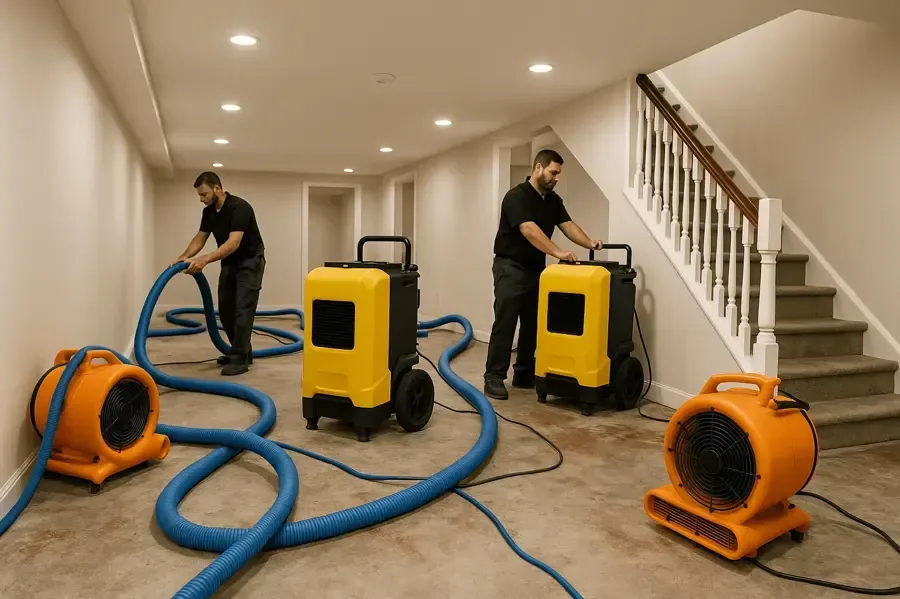
What the drying reaches after a slab leak
A leak under concrete is a slab leak water damage job on two fronts: the plumbing repair and the dry-out. The dry-out follows the water, not the stain.
Standing water and soaked pad come out first, then structural drying takes over.
- Moisture mapping finds every wet material, including the slab edge and wall cavities.
- Wet carpet, pad and any swollen baseboard are removed where readings call for it.
- Air movers and dehumidifiers run until the materials match a dry reference.
- Wall bottoms that stay wet are opened so air reaches the framing.
- Daily readings are logged, and equipment comes out only when the logs say dry.
Who does what after a slab leak is found
Two trades share the job, and keeping them separate avoids confusion. Neither one replaces the other.
The plumber
A leak detection plumber pressure tests the pipe, locates the leak and repairs it, or reroutes the pipe so the damaged section is no longer used.
- Locates the leaking pipe under the concrete.
- Repairs or reroutes the supply pipe.
- Confirms the pressure holds before the water goes back on.
The restoration team
The restoration team extracts standing water, removes what cannot be saved and dries the structure. It also keeps the moisture records that show the home reached dry.
- Maps moisture in floors, walls and the slab edge.
- Removes wet materials that will not dry in place.
- Runs and logs the drying until readings match the reference.
Questions
Can a slab leak be fixed without breaking the concrete?
That is the plumber's call. Options include repairing the pipe through the concrete or rerouting it through walls or overhead. Restoration deals only with the water damage that the leak caused.
How can a slab leak be told apart from a water heater leak?
A heater leak leaves water around the tank and its drain pan, and closing the supply valve to the heater stops it. A slab leak keeps running when the heater is shut off and often shows up as a warm floor spot away from the heater.
Does a slab leak always ruin the flooring?
Not always. Tile can often stay in place and be dried through the grout and slab edge, while wood, laminate and pad are more likely to come up. Readings decide each material.
How long does drying take after a slab leak?
A contained loss often dries in three to five days. Wall bottoms over a wet slab and wood floors take longer, and the daily readings set the end date.
Why does a well pump cycle when nothing is running?
A leak somewhere in the supply pipe drops pressure, so the pump restarts to refill the tank. Pump cycling with every tap closed is worth treating as a leak sign.
What if the leak is found only after the flooring is already damaged?
The damaged materials come up and the rest is dried. Photos taken before removal and the moisture readings show the extent of the loss, so take pictures of the floor before anything is moved.