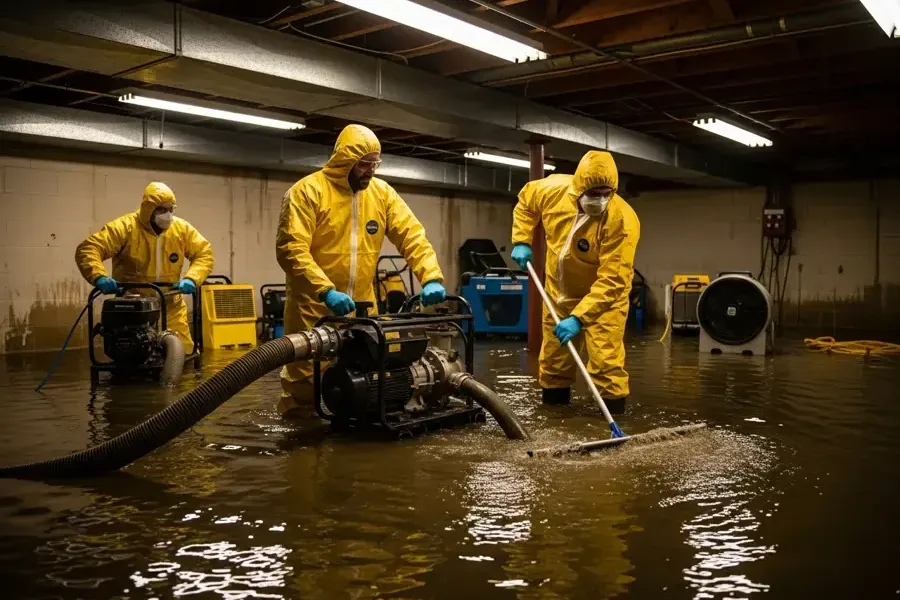
Many homes in the valley run on a private septic tank, so a backup often starts on the property itself. When wastewater rises through a drain, the cleanup is a contamination job before it is a drying job.
Key takeaways
- Septic backup water is Category 3, so it is handled as a health hazard from the start.
- The lowest drains in the house, such as a shower, tub or floor drain, are usually where wastewater shows first.
- Porous materials that touched wastewater, such as carpet, pad, insulation and low drywall, are removed rather than saved.
- Hard surfaces are cleaned and disinfected, and the work area is contained.
- A septic professional repairs the tank, pipe or drain field, and the restoration team handles what the backup soaked.
How a septic backup starts, and the signs before it
A septic system is a buried tank plus a drain field. When either one cannot take more water, wastewater looks for the lowest exit, and that is a drain inside the house.
A soaked drain field after a monsoon storm can slow a system down, which ties some backups to the weather. Flood losses are covered separately on the flash flood cleanup page.
Common causes
- A tank that is full and overdue for pumping.
- A blocked pipe between the house and the tank.
- A drain field that cannot absorb water.
- A heavy burst of water use, such as several laundry loads in a row.
Warning signs before the backup
A septic system usually gives notice before wastewater comes into the house.
- Several fixtures drain slowly at the same time.
- Gurgling sounds from a drain when another fixture runs.
- A sewage smell indoors or near the tank.
- A soggy, unusually green or foul smelling patch in the yard over the system.
- Water backing up in the lowest tub or floor drain after laundry or a long shower.
What comes up into the house
Backup water carries solids, toilet paper, grease and bacteria. It is Category 3 water, the same top contamination class used for flood runoff.
The smell is a warning in itself, but a clean-looking film left behind on a floor is still contaminated.
Water from a sink, shower or washer is gray water, while water from toilets and the main drain is black water. Once a backup mixes them in a house, the whole loss is treated as black water.
Because contamination is invisible once the water is gone, a floor that looks clean can still be unsafe until it has been cleaned and disinfected.
- Solids and toilet paper from the tank or the main drain.
- Grease and soap scum carried through the pipe.
- Bacteria and other contaminants that spread on shoes, pets and mops.
First steps when a drain backs up
Two groups of people handle a backup, and they do different work: a septic professional for the system and a restoration team for the house.
Stop adding water to the system
Every flush, load of laundry or dishwasher cycle pushes more wastewater toward the same blocked path.
- Stop flushing and avoid running sinks, showers, the washer and the dishwasher.
- Call a septic professional to check the tank, the pipe and the drain field.
Keep people and pets out of the area
Close doors to the wet rooms, keep children and pets away, and wear gloves and boots if entry cannot wait. Photograph the affected rooms from the doorway before cleanup begins.
What gets removed and what gets cleaned
On a slab, wastewater can seep under tile grout and flooring edges. Those spots are checked with a moisture meter even when the surface looks clean.
Porous materials come out
Contamination soaks into anything that absorbs water. Those materials are bagged and removed instead of cleaned.
- Carpet and pad in the wet area.
- Insulation, low drywall and baseboards the water reached.
- Cabinet kick plates and particle board that swelled.
- Rugs and soft items left on the floor.
Hard surfaces are cleaned and disinfected
Tile, concrete and framing are cleaned, treated with a disinfectant and dried. The subfloor is tested before anything new goes back.
Containment, extraction and drying
Sheeting seals the work area so contamination does not travel through the house, and HEPA air scrubbers filter the air during the work. Wastewater is pulled out with pumps and extractors before anything else.
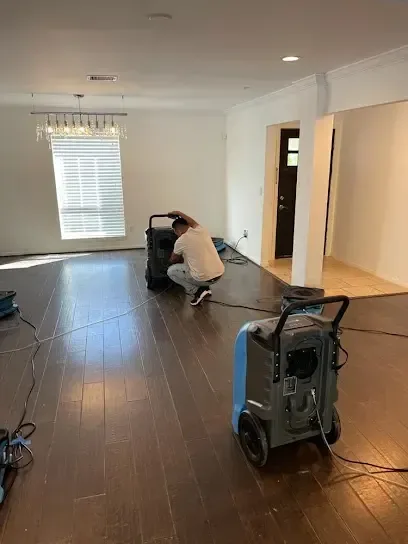
The process follows the steps on the sewage and septic backup cleanup page. After disinfecting, standard water extraction and drying equipment finish the job, and readings confirm it is dry.
Odor control comes last. Once the contaminated materials are gone and the surfaces are cleaned, the smell fades, and air scrubbers and dehumidifiers keep the air moving during the dry-out.
Household fans and heaters are not used to chase a smell, because they spread contamination through the house.
After the cleanup: the tank, the house and the next time
The septic repair is its own job, and the house is not safe to rebuild until the system is fixed. Otherwise the same backup can return to the same floor.
A toilet that overflows for other reasons is not always septic, and the water category can change. A clogged fixture is usually clean or gray water, while a backup from the tank or main drain is black water.
A septic professional decides on pumping, repair or replacement. The restoration team does not repair the tank, and the septic repair does not dry the house.
What to keep for the record
A short written note of when the backup started, which fixtures were affected and what was done helps anyone who works on the loss afterward.
Photographs from the doorway of each affected room, taken before cleanup begins, are the best record of what the wastewater reached.
- The date the first drain slowed or backed up.
- Which fixtures were involved and which rooms were wet.
- Any septic service visits and what the professional found.
- Photographs of the floors, walls and belongings before removal.
Questions
Why do the lowest drains back up first?
Wastewater follows gravity. When the tank or the pipe to it is blocked, the water rises to the lowest opening in the house, which is often a shower, tub or floor drain.
Can carpet that touched septic water be cleaned?
No. Contamination soaks into carpet and pad, so both come out. Hard surfaces such as tile and concrete can be cleaned and disinfected.
Is septic backup water dangerous to touch?
Yes. It carries bacteria and other contaminants. Gloves, boots and keeping children and pets away are the minimum until the work is done. Bare feet, shared mops and pet traffic move it from room to room.
Who fixes the septic system?
A septic professional pumps, repairs or replaces the tank, pipe or drain field. The restoration team removes the contamination in the house and dries the structure.
Does a septic backup always mean the tank is full?
No. A blockage in the pipe, a failing drain field or a heavy burst of water use can each cause a backup, so the system needs a proper inspection. The inspection also tells the household whether the problem is a one-time event or a sign of a failing system.
How long does a septic backup cleanup take?
It depends on how far the wastewater spread and how much has to be removed. Contaminated materials come out first, then cleaning and drying follow, and the readings set the end date.