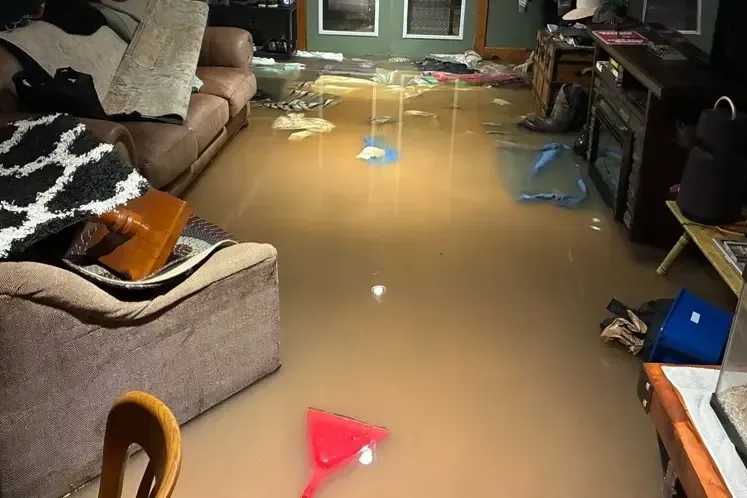
When a summer storm stalls over the Spring Mountains, runoff races down the washes and can end up in garages, hallways and living rooms. The water is dirty from the first moment, so the cleanup starts with safety, not with a mop.
Key takeaways
- Runoff that enters a house is treated as Category 3, because it carries soil, septic overflow and animal waste down the washes.
- Stay out of standing water where outlets or cords may be live, and keep children and pets away from it.
- Photograph every wet room and the high-water mark before anything is moved, then call for extraction.
- Soaked carpet, pad and insulation usually come out rather than dry in place.
- Mud and silt go first, because they hold moisture against the floor and walls.
How runoff gets into valley homes
The valley sits on alluvial fans and washes that drain the Spring Mountains. Rain on the slopes sends water down those washes and onto the flat ground where streets and homes sit.
A flood does not need to be deep to do damage. A few inches of runoff across a slab floor still soaks baseboards, door casings and the bottom of every wall it touches.
Monsoon storms come from July to September. The county flood study records major flash floods in 1983, 1997 and 2003, and summer storms have run over Homestead Road, Calvada Boulevard, Dandelion Street and Highway 160.
The remnants of Tropical Storm Hilary on August 20 to 21, 2023 put floodwater onto Highway 160, and the Red Cross opened a shelter in Pahrump.
Why flood water is handled as Category 3
The IICRC S500 standard rates flood water as Category 3, the most contaminated class. Runoff picks up whatever lies in its path before it reaches a door.
The label is not about smell or color. Runoff that looks fairly clear still counts as Category 3, because the contamination cannot be seen.
- Soil, mud and silt carried off open ground.
- Overflow from septic systems along the way.
- Animal waste from yards and washes.
- Fuel, oil and household chemicals from garages and driveways.
First steps while the water is still in the house
Make the house safe
Safety comes before salvage. Standing water and live electricity do not mix.
- Stay out of standing water when outlets or cords could be live.
- Switch off breakers to wet rooms only from a dry spot at the panel.
- Keep children and pets out of the water and the mud.
- Wear gloves and boots if entering the water cannot be avoided.
Photograph before anything moves
Take wide shots and close-ups before anything moves. Photos are the record of what the water touched.
Lift valuables to dry surfaces only when that is safe, then call for water extraction.
- Every wet room from the doorway, in wide shots.
- The high-water mark on walls, doors and cabinets.
- The source of the water, such as the door, garage opening or window well.
- Close-ups of damaged flooring, furniture and belongings.
- The mud and debris pattern on the floor, which shows how the water moved.
What gets removed and what gets dried
Category 3 changes the plan. Porous materials that flood water has touched are removed, while solid surfaces can be cleaned, disinfected and dried.
Hard goods such as glass, metal and sealed plastic can be washed and disinfected. Soft goods that sat in flood water, such as upholstery, mattresses and stuffed items, are usually discarded.
What comes out is decided by what the water touched, not by how bad a room looks. A wall that looks clean can still hold contaminated water in its bottom plate.
- Removed: carpet and pad, loose insulation, soaked drywall at the bottom of walls, and particle board cabinet bases.
- Cleaned and disinfected: tile, concrete, framing and other hard surfaces.
- Dried with equipment: subfloor, wall framing, slab edges and anything that was cleaned and still holds moisture.
Mud, silt and the order of the cleanup
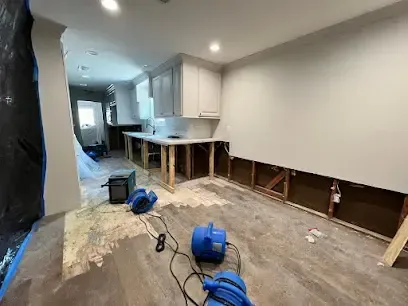
Mud comes out before drying equipment goes in. Silt left on a floor keeps the materials under it wet and carries the contamination along with it.
Once the mud and ruined materials are gone, air movers and dehumidifiers dry the structure, and readings tell the crew when it is done. The full process is on the flash flood cleanup page.
A flood cleanup follows a set order, and skipping a step usually means doing it twice.
- Make the area safe and assess how far the water reached.
- Remove mud, silt and debris from the floors.
- Extract standing water with pumps and extractors.
- Remove materials that cannot be saved, such as carpet, pad and soaked insulation.
- Clean and disinfect hard surfaces and framing.
- Dry the structure with air movers and dehumidifiers, and log moisture readings until dry.
Mistakes that make a flood loss worse
A few common habits turn a bad loss into a worse one.
- Running a household vacuum on wet floors, which is unsafe and spreads contamination.
- Waiting for the ground outside to dry before starting inside.
- Using household fans alone, which move contaminated air without drying anything.
- Throwing out damaged items before photographing them.
- Walking mud through the rest of the house.
Low garages and manufactured homes
Garages and entries at street level take the water first. In a manufactured home, runoff can push under the skirting and soak the belly insulation under the floor.
That kind of loss is closer to a manufactured home water damage job, since the floor structure is wet from below as well as from above.
After the cleanup, a walk around the outside to see where the water entered helps decide what to change before the next storm.
- Mud and debris removed from the garage slab and entry.
- Wall bottoms checked for water that wicked above the high-water mark.
- Stored cardboard, fabric and paper discarded when flood water reached it.
- Door thresholds and gaps checked to see how the water got in.
Questions
Is it safe to walk through flood water inside the house?
Not without care. The water is contaminated, and outlets, cords or appliances may be live. Wait until the power is made safe, and wear boots and gloves if entry cannot wait.
Can carpet that flood water soaked be dried and kept?
Usually not. Category 3 water leaves contamination in porous materials that drying cannot remove, so carpet and pad are normally replaced. Hard flooring underneath is checked separately, since water can sit under it.
Why does mud come out before the drying equipment goes in?
Mud and silt hold water against the floor and walls, and they carry contamination. Drying a floor under a layer of silt wastes time and leaves the surface dirty.
When is monsoon season in the valley?
It runs from July to September. Storms are often brief, but a stalled storm over the mountains can send a lot of runoff down the washes at once.
Does flood water need different cleanup than a pipe leak?
Yes. A clean supply pipe leak is Category 1 and mostly needs drying, while flood runoff is Category 3 and needs removal, cleaning and disinfecting before drying. Skipping that step leaves contamination in the house even if the room looks dry.
What should be photographed before cleanup starts?
Wide shots of each wet room, the high-water mark on the walls, the entry point of the water and close-ups of damaged flooring and belongings. These photos document the loss before anything is removed.