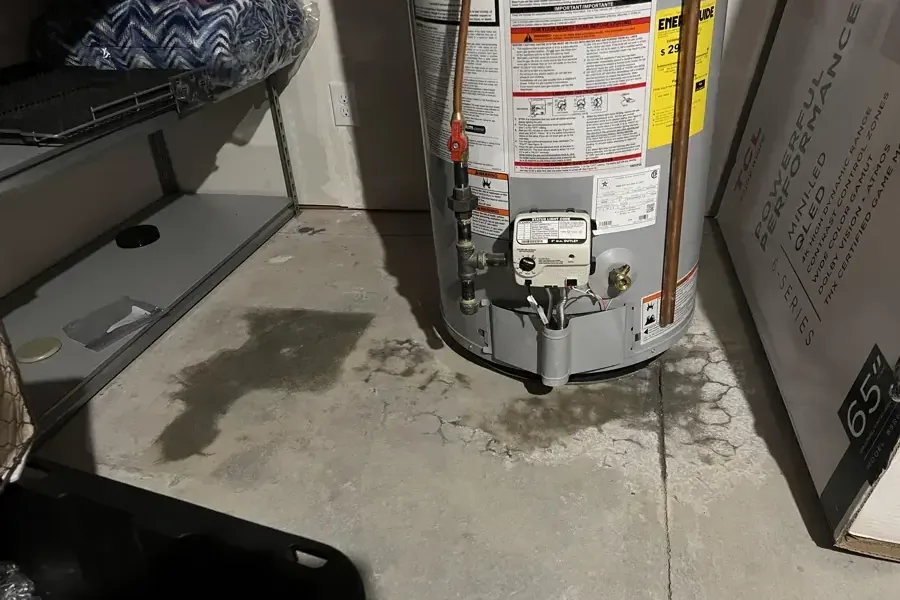
Groundwater in the valley carries a heavy load of minerals, and a water heater is where that load builds up first. A tank worn down by scale can fail with little warning and send water across a garage slab or into a closet.
Key takeaways
- Hard, mineral-heavy groundwater scales water heaters, valves and fittings, which shortens their life.
- A weeping relief valve, rust near the base and rumbling during heating are early signs of an aging tank.
- A leaking tank is replaced, not patched, and the cleanup of the soaked floor is a separate job.
- In a garage the water spreads across the slab, while in a closet it soaks wall bottoms and flooring.
- Close the cold supply valve to the heater and shut off its power or gas control first, then call for extraction.
What hard water does inside a tank
Groundwater here carries dissolved minerals. When it is heated, those minerals drop out as scale and settle on the bottom of the tank and around the heating parts.
A layer of scale makes the heater work harder, and it can hold water against the metal where corrosion begins. The same minerals clog valves and crust over fittings as the years pass.
Every heating cycle drops a little more mineral into the tank, so scale builds up cycle after cycle. The tank ages from the inside, where nobody can see it.
- Scale builds on the bottom of the tank and on heating parts.
- Crust forms on valves, fittings and the relief valve.
- Sediment can make a tank rumble or pop while it heats.
- Corrosion can start under the scale and wear through the tank wall.
Warning signs before a tank lets go
Tanks seldom fail without a hint. The signs are small and easy to miss, especially when the heater sits in a closet or the corner of a garage.
- A relief valve or its discharge pipe that drips or weeps.
- Rust streaks or flaking near the base of the tank.
- Mineral crust or a damp ring around fittings and the cold supply connection.
- Rumbling, popping or hissing during a heating cycle.
- Hot water that runs out sooner than it used to.
- A damp floor or a darkened drain pan under the tank.
Where the water goes when a tank fails
In a garage: across the slab
A garage tank empties onto the concrete. The water runs to low spots, along the walls and under anything stored on the floor.
It can reach the door into the house and wick into the wall bottoms there.
A garage floor that slopes toward a door or a corner pools the water instead of spreading it, which keeps one spot wet for longer.
- Cardboard boxes and fabric stored on the floor soak first.
- The threshold of the door into the house takes water next.
- Wall bottoms along the garage wall wick moisture upward.
In a closet or utility room: into walls and flooring
A closet tank sits close to drywall and flooring. Water soaks the wall bottoms, wicks into baseboards and flows under the flooring in the next room.
In a manufactured home
A heater closet in a manufactured home can send water through the floor opening and into the belly. That kind of loss is covered on the manufactured home water damage page.
What to do in the first moments
Hot water from a failed tank can scald, so keep clear of the spill until it has cooled.
Electric and gas heaters need different first steps, so find the right one before reaching for the tank. Standing water and live power must never meet, so the breaker comes before any walk through a wet closet.
- Close the cold water supply valve on top of the heater.
- Switch off the breaker for an electric heater, or turn the gas control to off for a gas heater.
- Keep children and pets out of the wet area.
- Move belongings off the wet floor.
- Photograph the tank, the floor and the damage before cleanup begins.
- Call for extraction while a plumber is lined up for the tank.
How the cleanup works
A plumber replaces the tank, and that repair does nothing to dry the floor. The cleanup follows the water, as described on the water heater leak cleanup page.
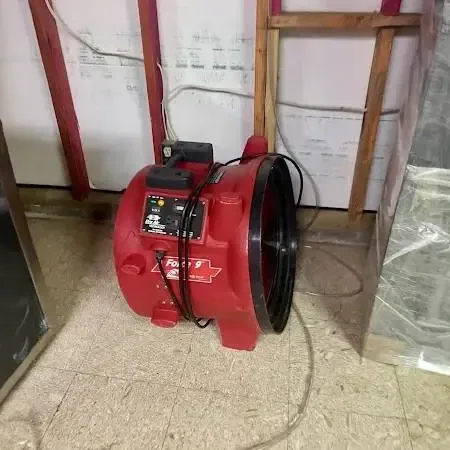
Wall bottoms behind a closet heater are the part most often missed. Moisture readings along the wall decide how high the drywall has to come off, and baseboards are pulled so the air can reach the studs.
- Standing water is pumped or extracted from the floor.
- Wet baseboards and low drywall come off where readings call for it.
- Carpet and pad in the path of the water are removed.
- Air movers and dehumidifiers dry slab edges, wall bottoms and flooring.
- Readings are logged until everything matches a dry reference.
Replacing the tank without repeating the damage
While the old tank is out, the area around it is easy to inspect. A few extra checks at that point keep the next failure small.
The restoration team can confirm that the floor and the wall bottoms read dry before the new tank goes in, so no wet material is closed back in.
- The shutoff valve above the heater turns freely and closes fully.
- A drain pan sits under the tank, with a drain pipe that runs to a safe spot.
- The relief valve discharge pipe is intact and points where water can run out safely.
- The floor and the base of the wall read dry on a moisture meter.
Reducing the odds of a repeat
Water softeners are common in valley homes, and they cut scale on the heater. A softener has its own tank, valve and drain that can leak, and those leaks are handled as appliance leak water damage.
A drain pan under the heater, with a drain pipe to a safe spot, catches slow drips. It cannot hold a full tank failure.
- Check the relief valve, the base and the fittings each season.
- Look for crust or damp rings at the connections.
- Know where the cold supply valve sits before a leak starts.
- Plan to replace an aging tank instead of waiting for it to fail.
Questions
How long does a water heater last in hard water?
No fixed number applies. Scale and corrosion shorten the life of a tank, and one that shows rust, weeping or noise is closer to the end than one that stays quiet and dry.
Can a leaking water heater tank be repaired?
A tank that leaks through its wall is replaced. Fittings and valves that drip can sometimes be repaired, and a plumber decides which case applies.
Does a water softener stop water heater leaks?
It reduces scale, but it does not remove the risk of age, corrosion or a failed fitting, and the softener itself can leak.
Who dries the garage or closet after a tank fails?
The plumber replaces the tank. The restoration team extracts the water, removes wet materials and dries the floor and wall bottoms until readings show dry. Standing water is handled through water extraction.
Is hot water from a failed tank dangerous?
It can scald. Keep clear of the water and the tank until it cools, and shut off the power or gas control before going near it.
How can a household tell whether the leak is the tank or only a fitting?
A fitting leak usually drips from a connection at the top or side and may stop when that connection is tightened or replaced. Water seeping from the bottom or the seams of the tank points to a failed tank.